Source Smart Charging Riding Boarding Suitcase for Travel, Commute, and Business
Explore 30 listings of Smart Charging Riding Boarding Suitcase options featuring brushless motors, CE and ISO certifications, and varied materials like aluminum and polyester. Buyers can compare specs including IP65 ratings, wheel types, and customization options for diverse travel needs.
Key considerations
Products List


Intelligent Cycling Electric 20 Inch Airport Transportation Travel Suitcase Luggage
$206.00 - $309.00
MOQ: 2 Pieces


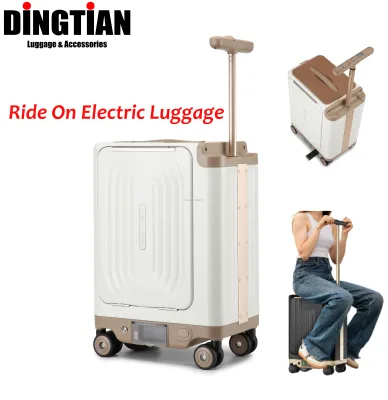
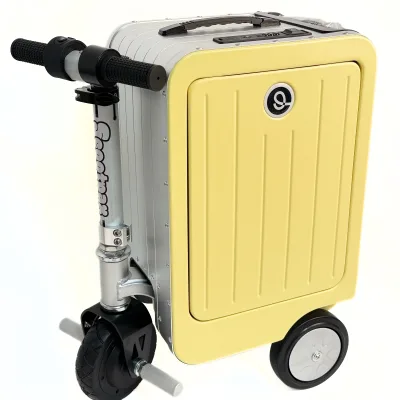
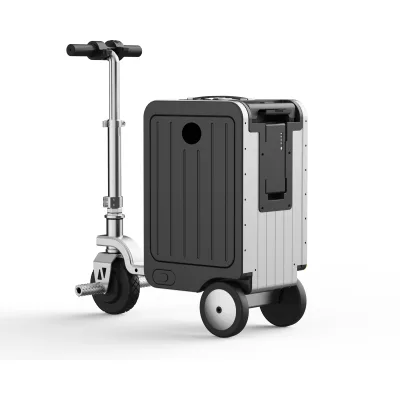
![[CE Certified] 4 Wheel Riding Hand Luggage Scooter Suitcase Airline Approved Factory Wholesale Airline Approved Smart Luggage](https://file.focusaim.com/api/image/preview/093c0e1b7be59cabb7a52bd0a0a0f9a1.png?bi=true&local=true)
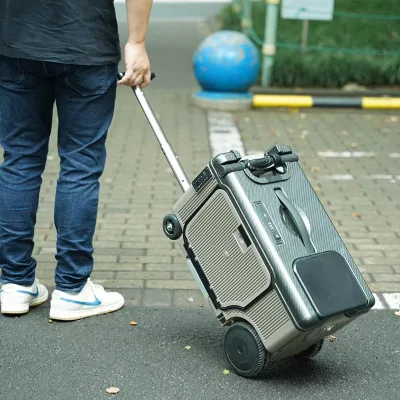
![[CE Certified]4 Wheel Electric Ride on Hand Carry Scooter Bag Cabin Suitcase Direct Bulk Order FCC Certified](https://file.focusaim.com/api/image/preview/a3bacb213c680db7452307e51a659449.png?bi=true&local=true)
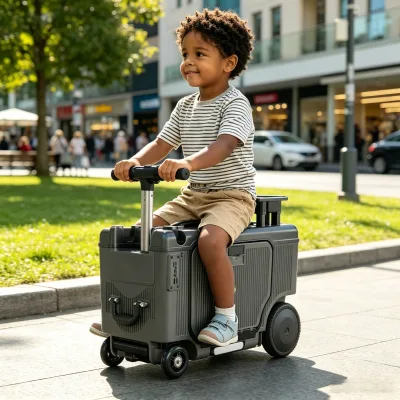
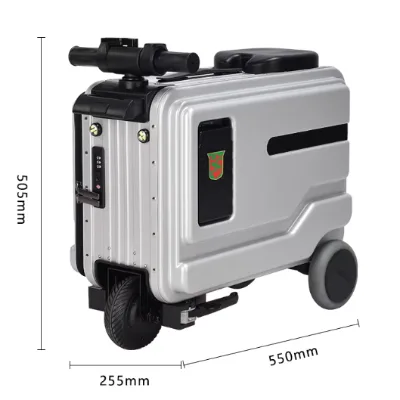


Fashionable Suitcase Front-Opening Password Boarding Luggage Universal Wheel Suitcase
$28.81 - $32.65
MOQ: 100 Pieces
Comprehensive Sourcing Guide
Strategic Sourcing Guide for Smart Charging Riding Boarding Suitcases
The global luggage market has evolved rapidly, driven by the increasing demand for integrated technology and multi-functional travel gear. Buyers searching for "Smart Charging Riding Boarding Suitcase" are navigating a complex landscape where traditional baggage features converge with electronic capabilities. This guide provides a disciplined, evidence-based framework for procurement professionals to evaluate suppliers, verify technical specifications, and manage risk when sourcing these advanced products. The analysis relies strictly on observed market data and verified product attributes to ensure actionable, non-speculative advice.
Technical Specifications and Functional Architecture
When evaluating a Smart Charging Riding Boarding Suitcase, the primary distinction lies in the integration of electrical systems within a robust mechanical structure. Based on observed product data, these units often feature a rated power of 200W, which suggests a capacity to support moderate electronic loads, such as charging devices or powering small onboard motors. The operating speed is noted as constant speed, indicating a drive system designed for stability rather than high-velocity acceleration. This is critical for safety, particularly when the suitcase is used as a ride-on vehicle for children or as a mobility aid for travelers.
The electrical architecture typically relies on an excited mode with a charging voltage of AC 230V. This standard voltage requirement implies that the product is designed for markets with compatible grid infrastructure, such as Europe and parts of Asia. Buyers must verify that the internal power management system includes appropriate rectification and regulation to handle this input safely. The casing protection is consistently listed as a closed type, which is essential for shielding internal components from dust and moisture. With an IP65 rating, the product offers protection against low-pressure water jets from any direction, making it suitable for outdoor use in varying weather conditions.
The mechanical structure is predominantly brushless, a design choice that enhances longevity and reduces maintenance compared to brushed motor systems. The weight of these units varies significantly based on the material composition. For instance, aluminum models are observed to weigh approximately 9.5kg, while polyester-based variants may differ. The internal structure often includes an expandable layer and multiple compartments, sometimes featuring a compression system to secure contents during transit. The closure mechanism is typically a high-quality nylon zipper with a zinc alloy puller, ensuring durability against the stress of frequent opening and closing.
Compliance and Certification Verification
In the realm of electronic luggage, compliance is not merely a formality but a prerequisite for market access and liability protection. The observed product data lists CE, ISO, and RoHS certifications as high-confidence attributes. The CE mark indicates conformity with health, safety, and environmental protection standards for products sold within the European Economic Area. The RoHS directive ensures that the product is free from specific hazardous substances, which is vital for electronic components. The ISO certification, while often generic in listings, should be verified against specific standards relevant to electrical safety and quality management systems.
Buyers must exercise caution regarding the "ISO 27001" standard mentioned in background data. This standard pertains to information security management rather than product manufacturing or electrical safety. Therefore, it should not be assumed to validate the physical safety of the suitcase or its electrical charging system. Instead, procurement teams should request specific test reports for electrical safety, such as IEC 60335 standards for household appliances, and mechanical durability tests.
The product origin is frequently listed as Zhejiang or Jiaxing, China, regions known for their manufacturing clusters. While these locations suggest a mature supply chain, buyers must verify that the specific factory holds the claimed certifications. The market for these products spans South Asia, the Middle East, the USA, South America, and the EU. Each of these regions has distinct regulatory requirements; for example, the USA may require UL certification, while the EU strictly enforces CE and RoHS. Procurement teams should not assume that a single certification covers all target markets and must request region-specific compliance documentation.
Cost Drivers and Pricing Dynamics
The pricing for smart charging riding boarding suitcases is influenced by a combination of material costs, electronic complexity, and customization levels. The observed price range in the market spans from $6.42 to $476 USD. This wide variance reflects the diversity in product configurations, from basic rolling suitcases with simple charging ports to advanced ride-on units with motors and batteries. The lower end of the spectrum likely corresponds to standard luggage with added features, while the higher end represents fully integrated smart mobility solutions.
Material composition is a primary cost driver. Aluminum models, noted for their durability and premium feel, generally command higher prices than polyester or nylon alternatives. The inclusion of a brushless motor and a battery system capable of supporting a 200W load adds significant manufacturing costs. Additionally, the presence of specialized components like zinc alloy zipper pullers and soft handles containing PP and sponge contributes to the overall price.
Customization is a key factor in cost variability. The product data confirms that customization is available for colors and other details. Buyers requesting specific color schemes, logo placement, or unique packaging (such as gift boxes) will incur additional costs. The MOQ (Minimum Order Quantity) ranges from 1 to 500 units, offering flexibility for small buyers but potentially limiting economies of scale for larger orders. Buyers should negotiate based on the specific configuration; higher customization levels may require higher MOQs to justify the setup costs.
Typical Applications and Market Segmentation
The application of smart charging riding boarding suitcases is diverse, catering to various user needs. The primary application is identified as "travelling," where the dual function of luggage and charging station provides significant convenience. For business travelers, the ability to charge devices while moving through airports is a high-value feature. The "leisure" style variant suggests suitability for family vacations, where the ride-on capability can be utilized by children or for recreational use.
The product features, such as multi-functional compartments and light weight, make it ideal for long-haul travel where storage efficiency and ease of handling are paramount. The expandability feature allows users to accommodate varying packing needs, from short trips to extended vacations. The durability features, including waterproof and scratch-resistant properties, ensure the product can withstand the rigors of airport handling and outdoor environments.
The market analysis indicates strong demand in South Asia, the Middle East, the USA, South America, and the EU. In the USA and EU, the focus is likely on safety and compliance, given the strict regulations regarding electronic devices and children's products. In emerging markets like South Asia and South America, the value proposition may center on the multifunctionality and durability of the product. Buyers should tailor their product selection to the specific needs of these regions, considering factors like voltage compatibility and local climate conditions.
Supplier Evaluation and Quality Assurance
Evaluating suppliers for this specialized product category requires a rigorous approach to quality assurance. The observed product attributes, such as the use of high-quality nylon zippers and zinc alloy pullers, indicate a focus on component quality. However, buyers must verify that these claims are consistent across all units produced. The "High Confidence" status of certifications like CE and ISO suggests that reputable suppliers maintain these standards, but verification is essential.
Quality control should focus on the integration of electrical and mechanical systems. Buyers should request samples to test the charging voltage stability, the reliability of the brushless motor, and the effectiveness of the IP65 protection. The temperature range of -10°C to +40°C is a critical specification that must be validated through thermal testing. Products failing to operate within this range could pose safety risks or lead to customer dissatisfaction.
The packing method is another indicator of supplier professionalism. Some products are packed in gift boxes, while others use OPP bags or carton packing. The choice of packaging should align with the target market's expectations and the product's value proposition. For premium aluminum models, gift box packaging is appropriate, whereas bulk orders for the mass market may utilize standard carton packing. Buyers should ensure that the packaging provides adequate protection during transit to prevent damage to the electronic components.
Long-Term Procurement and After-Sales Considerations
Sourcing smart charging riding boarding suitcases involves long-term considerations beyond the initial purchase. The complexity of the product, with its integrated electrical systems, necessitates a robust after-sales support strategy. Buyers should evaluate the supplier's ability to provide spare parts, such as batteries, motors, and charging adapters. The availability of these components is crucial for maintaining the product's lifecycle and ensuring customer satisfaction.
The warranty terms and service agreements should be clearly defined in the procurement contract. Given the potential for wear and tear on moving parts like wheels and zippers, suppliers should offer guarantees on these components. The "Light Weight" and "Durability" features are selling points that must be maintained over time; therefore, the supplier's quality control processes must be consistent.
Furthermore, buyers should consider the scalability of the supply chain. As demand grows, the supplier must be able to increase production without compromising quality. The observed MOQ range of 1 to 500 suggests flexibility, but buyers should discuss capacity planning with the supplier to ensure they can meet future order volumes. The origin of the product, whether Zhejiang or Jiaxing, should be factored into logistics planning, as these regions have well-established shipping routes but may experience seasonal fluctuations in production capacity.
In conclusion, the procurement of smart charging riding boarding suitcases requires a balanced approach that considers technical specifications, compliance, cost, and long-term viability. By adhering to the evidence-based guidelines outlined in this guide, buyers can mitigate risks and secure high-quality products that meet the evolving demands of the global travel market. The integration of advanced features like brushless motors and IP65 protection, combined with rigorous supplier evaluation, ensures that the final product delivers value and reliability to end-users.
FAQs
What certifications do smart charging riding boarding suitcases have?
These suitcases typically hold CE, ISO, and RoHS certifications. Buyers should verify that the specific factory holds these claimed certifications to ensure compliance with safety and environmental standards for the target market.
Can the product be customized for specific colors and details?
Yes, customization is available for colors and other details. Buyers requesting specific color schemes, logo placement, or unique packaging like gift boxes will incur additional costs and may need to meet higher minimum order quantities.
How does the charging voltage requirement affect market compatibility?
The product requires AC 230V charging voltage, which implies design for markets with compatible grid infrastructure like Europe and parts of Asia. Buyers must verify internal power management systems can handle this input safely for their target regions.
Which materials are used for the suitcase body and interior?
Materials vary, with aluminum models weighing around 9.5kg and polyester or nylon variants also available. The interior structure often includes expandable layers and multiple compartments secured by high-quality nylon zippers with zinc alloy pullers.
What is the typical price range for these smart suitcases?
The observed price range spans from 6.42 to 476 USD. This variance reflects differences in configuration, from basic luggage with charging ports to advanced ride-on units with motors and batteries, influenced by material and electronic complexity.
How does the IP65 rating impact outdoor usability?
The IP65 rating provides protection against low-pressure water jets from any direction, making it suitable for outdoor use in varying weather conditions. This ensures the internal electrical components remain shielded from dust and moisture during transit.